
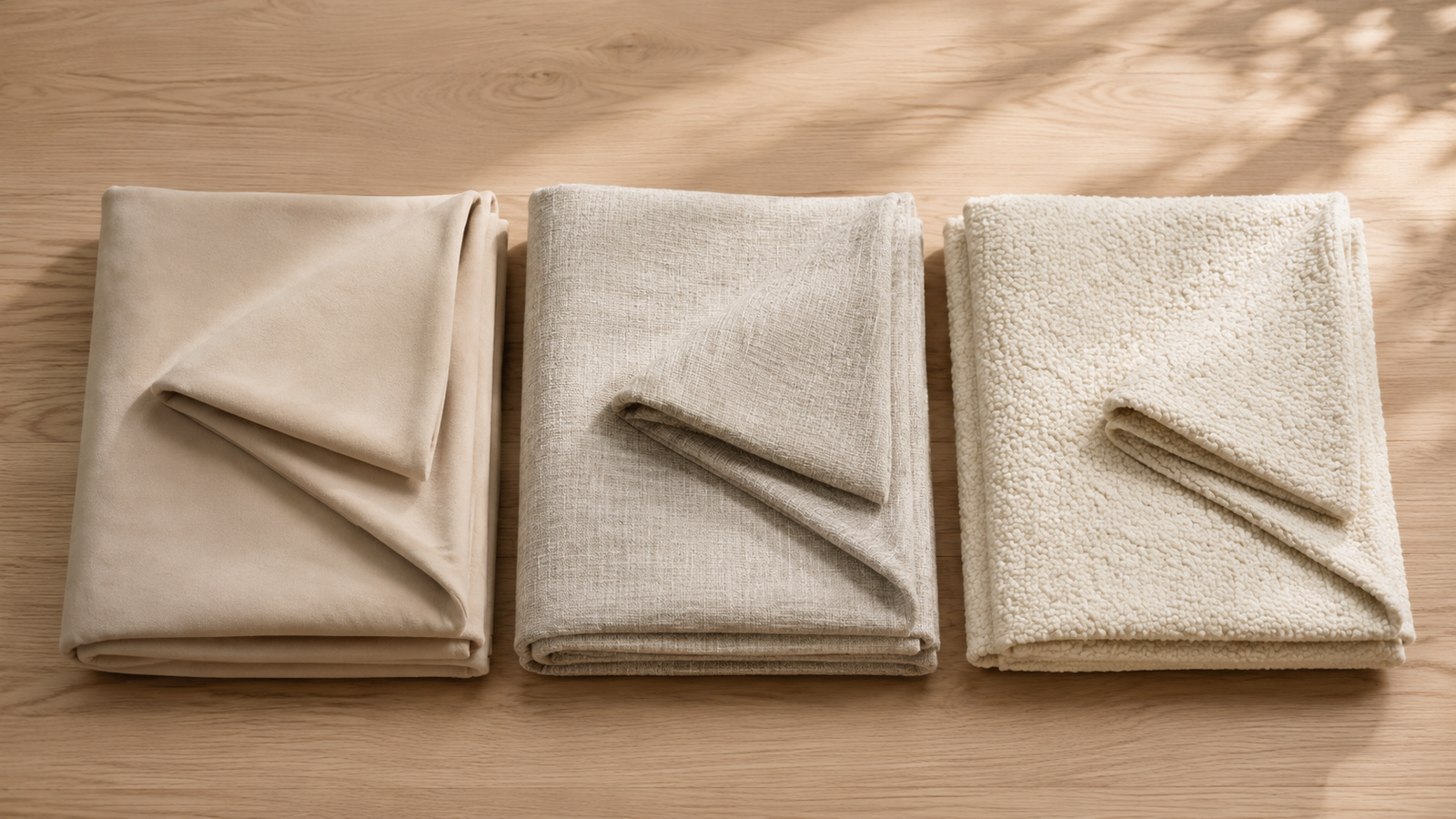
A sofa cover is fabric and elastic. The elastic does the work of fitting. The fabric does the work of being seen, touched, sat on, washed, sat on again, and seen on the day someone visits the room for the first time. The fabric is what you live with.
Three fabrics dominate the well-made sofa cover market: soft-touch microfibre, linen-look weave, and boucle-style. Each has a different surface, a different relationship to light, a different way of aging, and a different room where it belongs.
This guide compares them honestly — not as alternatives ranked from best to worst, but as three different answers to three different rooms. By the end, you will know which one is the right answer for yours.

The three fabrics, in one paragraph each
Soft-touch microfibre is the working horse. A fine, matte, slightly brushed surface that absorbs light rather than reflecting it. Quiet, calm, dense to the touch. The most durable of the three. The fabric that holds family life without showing it.
Linen-look weave is the more visual one. A woven surface with visible warp and weft, occasional natural slubs, a slight sheen when light hits it sideways. Lighter, more breathable, more textured. Reads as natural in a way microfibre cannot. Less robust under heavy use.
Boucle-style is the textural one. A surface built from small loops of yarn that catch shadow and create depth at close range. The most three-dimensional of the three. Beautiful in a styled, layered room. The most delicate to live with, the most distinctive to look at.

Soft-touch microfibre: the everyday answer
Microfibre is the fabric you reach for when you want a sofa cover that lasts, washes well, and stays calm in the room. It is woven from very fine synthetic threads — finer than the hairs on a human arm — which is what gives it that dense, matte, slightly velvet surface.
When you touch it, you feel softness without slipperiness. When you sit on it, the fabric gives slightly, then holds. When the cushion compresses, the fabric does not pull or pucker. The weave is tight enough that small spills bead briefly on the surface before being absorbed — which gives you a window to lift them with a cloth.
How it ages. Slowly and gracefully. The colour holds for years if washed cool. The surface stays soft if dried at low heat. The weave does not pill quickly — and even when it eventually does, the pills are small and remove with a fabric shaver.
How it washes. Well. A cool machine wash at 30°C, mild detergent, no bleach, no fabric softener (which coats the fibres and reduces stretch). Air dry, or tumble dry at the lowest setting. Refit while slightly damp for the cleanest finish.
The room it belongs in. Any room where the sofa is the primary sofa. Family living rooms. Studios. Apartments where the same sofa holds breakfast, evening, weekend. The fabric does not announce itself, which is its strength: the eye reads the room first, the cover second.
Where it falls short. Microfibre does not have the visual character of linen or boucle. It is calm to the eye, which means it does not draw attention. If you want the cover to be a visible part of the room's styling, microfibre is not the answer.
For most people choosing a sofa cover for the first time, microfibre is the right default. Browse the stretch sofa covers range — most are built around this fabric for exactly this reason.

Linen-look weave: the visual answer
Linen-look weave is fabric for a sofa that wants to be looked at. The surface is woven, not brushed, so the warp and weft are visible. Natural slubs — small thicker threads scattered through the weave — give the surface a quiet irregularity. Light hits it sideways and creates a subtle horizontal sheen that pure microfibre does not have.
The fabric reads as natural. It looks like a textile that came from somewhere, rather than a uniform synthetic. It is a fabric that pairs with linen curtains, raw wood, ceramic, and stone — the materials of a more visually layered room.
How it ages. Beautifully but visibly. The fabric softens with each wash, becoming more pliable and more lived-in. The colour fades very slightly over years, which suits the linen aesthetic. The slubs become slightly more pronounced as the weave relaxes.
How it washes. Cool wash, mild detergent. Linen-look weave does not tolerate hot water — the fibres tighten and the texture changes. Air drying is strongly preferred over tumble drying. Iron only on the lowest setting if you want a crisper finish.
The room it belongs in. A living room that already has natural materials in it. Light wood furniture. A linen curtain. A wool rug. A ceramic vase on the coffee table. The linen-look cover fits that visual vocabulary. In a room of glossy surfaces and synthetic finishes, it can read awkward.
Where it falls short. Linen-look is less durable than microfibre under heavy use. It shows wear at the front of the seat sooner. It is less stretchy, so the fit is slightly looser. It is the choice for a sofa that sees considered use, not constant use.
If your room already has the visual vocabulary linen pairs with, this is the fabric that completes the look.

Boucle-style weave: the textural answer
Boucle is the most distinctive of the three. The surface is built from small, regular loops of yarn that catch shadow and create visible depth. From two metres away, the fabric looks textured but flat. From half a metre, you see the loops. From close range, the surface is almost sculptural.
Boucle is a fabric for a sofa that is part of the room's styling, not just its function. It pairs with neutral palettes, warm wood, soft lighting, and rooms where each material is chosen carefully. It is the fabric of a styled living room rather than a working living room.
How it ages. Slowly if the room is gentle, faster if the room is rough. Boucle is more vulnerable to snagging than the other two — sharp objects, pet claws, jewellery can pull a loop. A pulled loop does not unravel (the yarn is fixed at both ends), but it shows. The colour holds well; the texture holds well if treated well.
How it washes. Carefully. Cool wash, on a delicate cycle, in a laundry bag to protect the loops from agitation. No fabric softener. Air dry only — tumble drying flattens the loops. Reshape gently while drying.
The room it belongs in. A quiet, considered room. A bedroom sofa or a reading-corner sofa rather than the main family piece. A room with limited foot traffic and few small hands. A room where the cover is part of the visual story.
Where it falls short. Daily heavy use will tire boucle faster than either of the other two. It is not the fabric for a sofa with children climbing on it, pets sleeping on it, or daily meals taken in front of the television. The texture is its beauty and its vulnerability.
Covaba's boucle edit gathers the most considered colours in this fabric — built for the room where the cover is part of the styling.
Side-by-side: how they actually compare
| Quality | Soft-touch microfibre | Linen-look weave | Boucle-style |
|---|---|---|---|
| Touch | Dense, matte, slightly velvet | Woven, breathable, slubbed | Looped, three-dimensional |
| Visual character | Quiet, calm, recedes | Natural, layered, present | Textured, sculptural, distinctive |
| Durability | High | Medium | Medium-low |
| Stretch | High | Medium | Medium |
| Washing | Easy (cool machine) | Cool wash, air dry | Delicate wash, air dry only |
| Best room | Family living room | Layered, styled living room | Quiet, considered space |
| Aging | Slow, graceful | Soft, lived-in | Beautiful if treated well |
This is not a hierarchy. Each fabric is the right answer for a specific room. The wrong move is to pick the fabric that looks best in a photograph and put it in a room where it will be sat on hard every day.

Three rooms, three answers
To make the choice concrete, three real living rooms and the right fabric for each.
A family living room. A young household, a three-seater sofa as the centrepiece, two small children, daily life lived on the cushions. Spills happen weekly. The sofa is the room's working surface. The right fabric is soft-touch microfibre. It absorbs the day, washes cool, holds colour through twenty cycles.
A quiet apartment. One or two adults, a sofa in front of a low coffee table, a linen curtain, a wool rug, a ceramic vase. The room has been styled with care. The sofa is sat on every evening but never hard. The right fabric is linen-look weave. It pairs with the existing materials and reads as part of the room's visual vocabulary.
A reading corner or guest sofa. A second sofa in a study, bedroom, or guest room. Used a few times a week. Visible from the door of the room. Often photographed by the person who lives there. The right fabric is boucle-style. It gives the corner a finished, considered look without being asked to hold daily life.
What about colour?
Fabric and colour interact. The same colour reads differently on the three fabrics.
A warm beige on soft-touch microfibre reads quiet and grounded. The matte surface keeps the colour calm and stable through the day. The same beige on linen-look weave reads slightly lighter, with subtle horizontal sheen catching the light. The same beige on boucle reads creamier, with shadow in the loops giving it visible depth.
If you have chosen a colour and are unsure which fabric to pair it with, ask: what role do I want this colour to play? Recede (microfibre), participate (linen-look), or stand out (boucle).
The fabric and the fit
A fabric is only as good as how it sits on the sofa. All three of these fabrics, when made into well-cut stretch covers, fit a sofa with the same basic principle: drape, tuck, settle. The difference is how forgiving each is.
Soft-touch microfibre has the most stretch and the most grip. It absorbs small variations in sofa dimensions and holds the tuck firmly. Linen-look has slightly less stretch — the weave is less elastic — so the fit is more relaxed and benefits from foam rods in the seat gaps. Boucle has medium stretch but a less grippy surface; the loops do not grip the upholstery underneath quite as well, so a boucle cover sometimes needs more careful tucking to stay in place.
None of this changes which fabric you should choose. It only changes how you fit it. Detailed measuring guidance is in how to measure your sofa.
Care: the short version
A long fabric life depends on three things: cool water, gentle drying, no fabric softener. Hot water shrinks. High heat damages elastane. Fabric softener coats the fibres and reduces stretch over time. Avoid these three, and any of the three fabrics will last for years.
The full care routine — washing temperatures, drying methods, refitting after washing, stain handling — is in our sofa cover care guide.
The thinking behind the choice
A sofa cover is not the most expensive thing in the room. It is one of the most visible, and one of the most touched. The fabric you choose decides how the room feels every evening, how the sofa feels when you sit down, and how the cover holds up over the years you use it.
This is what we mean when we say: refresh, don't replace. The cover changes the feel of the room without changing the sofa underneath. The fabric is how that change reads — calmly, naturally, or texturally. Read more about the thinking behind the brand on our story.
Pick the fabric for the room you live in, not the room in the photograph. The cover will fit. The room will change. The sofa stays.
FAQ
Q1: Which fabric is the most durable? A1: Soft-touch microfibre. It is the densest of the three weaves and the most resistant to surface wear. With cool washing and gentle drying, it holds its colour and texture for five to ten years of regular use.
Q2: I have pets — which fabric should I avoid? A2: Boucle-style. The looped surface can snag on claws, and a pulled loop is visible. Soft-touch microfibre is the safer choice in a household with pets. Linen-look sits between the two — durable enough for occasional pet contact, but not for daily.
Q3: Will any of these fabrics shrink in the wash? A3: All three will shrink slightly if washed in hot water. Cool washing (around 30°C) preserves the original dimensions. Avoid tumble drying at high temperatures, which is the most common cause of cover shrinkage.
Q4: How can I tell which fabric a cover is made from before I buy? A4: Look at the product photograph at high resolution. Microfibre reads as a uniform matte surface. Linen-look shows a visible weave with horizontal direction. Boucle shows a clearly textured surface with visible loops. Most product descriptions also state the fabric type explicitly.
Q5: Can I mix fabrics — a microfibre sofa cover and boucle cushion covers? A5: Yes, and it often works well. A microfibre sofa cover gives the room its calm base; boucle cushion covers add a textural detail at the eye level. The two fabrics complement each other rather than compete.
Q6: Does the fabric affect how cool or warm the sofa feels to sit on? A6: Slightly. Linen-look is the most breathable of the three — it feels cooler in summer. Boucle traps a small amount of air in the loops and reads slightly warmer. Microfibre sits between the two, neutral in most conditions.